What an institutional bet looks like
Sutskever’s “age of research” reads as an institution: a hiring policy, two financings, a TPU contract and no product. SSI raised $3 billion in seven months; Reuters put NVIDIA’s 2026 investment at about $5 billion.
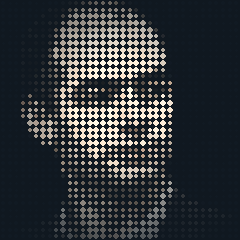
Ilya Sutskever, who co-founded OpenAI and now runs Safe Superintelligence, sat down with the podcaster Dwarkesh Patel on November 25, 2025 and offered a periodization of the field clean enough to travel. The years 2012 through 2020 were research-driven. The five years that followed were “the one word: scaling.” From 2026 onward, the field reverts to research, only this time done on big computers. Sutskever placed his own company inside the third bucket with a single-line claim: “We are squarely an age of research company.”
“Age of research” reads first as an institutional artifact — a hiring policy, two fundraises, a TPU contract, a CEO transition, a no-product strategy — before it reads as a thesis about the field. On that reading, Sutskever has not described what is happening. He has placed a wager about what will happen, and the wager has a balance sheet.
The bet, by the numbers on the page
Safe Superintelligence Inc. — SSI — was founded on June 19, 2024 by Sutskever, Daniel Gross, who had been Apple’s machine-learning lead and a Y Combinator partner before turning investor, and Daniel Levy, who came out of OpenAI’s technical staff. The founding text said the lab would be “the world’s first straight-shot SSI lab” with “one goal and one product: a safe superintelligence.” It promised insulation from “short-term commercial pressures” — language that, decoded, meant no API, no chatbot, no model release, no paper. Investors were buying a wager on a single research direction held in the head of a single researcher.
Before the interview, they bought it twice. On September 4, 2024, SSI raised $1 billion at a $5 billion valuation from a16z, Sequoia, DST Global, and the Gross-Friedman vehicle NFDG. By March 10, 2025, Greenoaks Capital had led a $2 billion round at $30 billion. By April 11, 2025, when Reuters reported that Alphabet and Nvidia had taken stakes, the same round valued SSI at $32 billion, with Greenoaks anchoring at $500 million. Roughly $3 billion in seven months, against no product, no paper, and roughly fifty employees by mid-2025. Two days before the round expanded, Google Cloud’s Darren Mowry, who runs startup partnerships there, confirmed SSI was on TPU as primary compute. On July 27, 2026, NVIDIA added an investment the companies did not price; Reuters, citing a person briefed on the deal, put it at about $5 billion, which would bring SSI’s reported funding to roughly $8 billion.
Through May 2026, SSI’s public technical artifacts consisted of a founding manifesto and two short X-mirrored update posts, and the most recent substantive Sutskever statement of record was the Dwarkesh interview from November. On July 26, 2026, SSI posted a third update, announcing its NVIDIA partnership, and in NVIDIA’s July 27 announcement Sutskever said SSI had “research that is worthy of scaling up.”
The hiring posture matches the artifact posture. Reports describe a strict secrecy regime — Faraday-cage phone storage for candidates is the recurring detail — with the engineering team reporting directly to Sutskever. Headcount roughly fifty as of July 2025. No marketing surface. No demo. No technical blog. No conference circuit beyond the December 2024 NeurIPS “Test of Time” talk, which was about a 2014 paper.
Then on July 3, 2025, Sutskever posted on X. Daniel Gross had departed for Meta four days earlier, joining what would become Meta’s Superintelligence Labs alongside Alexandr Wang and Nat Friedman. Sutskever became formal CEO; Levy became president. The post rebuffed acquisition rumors and closed with a sentence that has functioned as the company’s confidence mantra since: “We have the compute, we have the team, and we know what to do.”
A $32 billion lab, about 50 people, on TPU, with no public technical artifact and one CEO who is also the engineering lead, broadcasting that it knows what to do without saying what it is doing.
The wager translated
Strip the periodization down and what remains is a falsifiable claim about who finds the next breakthrough. The claim has two parts. First: the recipe of web-scale autoregressive pretraining — the thing that produced GPT-3, GPT-4, the Claude models, Gemini — has run out of road, because the supply of high-quality natural training data is finite while compute and parameter capacity keep growing. Sutskever called the data “the fossil fuel of AI” at NeurIPS 2024 and pointed out that “we have but one internet.” Second: what comes next is not more of the same. It is new ideas, executed on big computers, by small teams that have not had their research instincts dulled by product cycles.
The qualifier in “pretraining as we know it will unquestionably end” carries the argument. Sutskever has not said scaling has ended. He has said the specific recipe has, and he has pointed at what might follow it: better generalization, something like human value functions, and models that keep learning after deployment. He says he has identified a missing principle. He will not say what it is.
The institutional form of the claim is the bet that fifty people who have not built a product can find that principle before the multi-thousand-person organizations that did build the products do. SSI’s posture of no product and no published paper (its own site listed none as of October 10, 2026) is not a marketing absence. It is the operationalized form of the founding text: commercial product cycles distort research; the test is whether the absence holds and produces a discovery.
The cap table is what makes the bet testable. If the bet pays off — if SSI surfaces, eventually, with something that compresses or leapfrogs the recipe — the $32 billion valuation prices in a step-change discovery. If it fails, the failure decomposes three ways: the thesis was wrong (the recipe was not exhausted), the execution was slow (someone else got there first), or a hyperscaler simply closed the gap with the recipe Sutskever called dead.
SSI against the consensus
Before NVIDIA’s July 2026 investment, SSI had raised approximately $3 billion in total. In the same window, Anthropic disclosed roughly $400 billion in compute commitments anchored on 3.5 gigawatts of TPU capacity, with run-rate revenue past $30 billion by early April 2026 — more than triple end-2025 — and Dario Amodei, Anthropic’s CEO, said on May 6, 2026, around the SpaceX Colossus-1 announcement, that in the first quarter its revenue and usage had grown at an annualized rate of about eightyfold a year. OpenAI announced approximately $1.4 trillion in compute commitments across partly overlapping deals with its Stargate joint venture, Oracle, Azure, AWS, and silicon counterparties (Altman, October 28, 2025 presentation). In July 2026, Microsoft, Alphabet, Amazon, and Meta guided to about $720–745 billion of combined capital spending for 2026, each by its own definition of total capex.
SSI’s reported funding is small beside the hyperscalers’ 2026 capital budgets
US dollars, billions; each bar is a different kind of money
US dollars, billions
Sources: Axios, Oct 2025; Anthropic, Apr–May 2026; CNBC, Apr 30, 2026; company guidance, Jul 2026; SSI and NVIDIA, Jul 27, 2026; Reuters, Jul 2026
Note: NVIDIA did not disclose its investment; the hyperscaler bar is the midpoint of $720–745B of guidance.
SSI’s first two rounds took seven months. On July 27, 2026, SSI and NVIDIA announced a partnership intended to increase SSI’s compute tenfold. Even with NVIDIA’s reported investment, SSI’s financing remains small beside the hyperscalers’ annual capital budgets. Sutskever does not need to outspend the consensus to be right. He needs to outpace it on a different axis. The architecture of his wager is that a small team holding a single research idea, with access to Google’s TPUs and, from July 2026, NVIDIA’s Vera Rubin systems, finds the next regime change before a 100,000-person hyperscaler stack — built, contracted, and increasingly committed to the recipe — pivots to whatever it is.
Who disagrees, and how
The cleanest counter is the capex itself. If the recipe were exhausted, the labs running it would not be growing this fast: Anthropic reported first-quarter growth at an annualized rate of about eightyfold. Anthropic’s run-rate, past $30 billion by April 2026 and on the same TPU substrate as SSI, suggests the bottleneck is power and silicon, not ideas. Demis Hassabis, then Google DeepMind’s chief executive and since August 2026 its chair and Alphabet’s chief scientist, said at the Axios AI+ Summit in December 2025 that “the scaling of the current systems, we must push that to the maximum… It could be the entirety of the AGI system.” Hassabis is not a pure bull — on Lex Fridman’s podcast in July 2025 he gave AGI by 2030 a 50/50 probability. He is closer to Sutskever than Altman is. He is not as close as Sutskever needs.
Sam Altman’s “Three Observations” essay from February 2025 explicitly defends scaling laws as accurate “over many orders of magnitude” and argues there is “no reason for exponentially increasing investment to stop.” Dario Amodei’s “Machines of Loving Grace,” from October 2024, frames the underlying capability curve as a “smooth, unyielding increase” obscured by public narrative volatility. Geoffrey Hinton, the Turing laureate often credited as a godfather of deep learning, has argued in public that scaling laws are not dead. Rich Sutton, the reinforcement-learning pioneer at the University of Alberta, wrote the 2019 essay the bull camp most often invokes — “the bitter lesson,” the claim that general methods which scale with compute beat human-knowledge-engineered approaches in the long run. Sutton himself has rejected that reading. On Patel’s podcast in September 2025 he clarified that LLM pretraining, in its current form, does not qualify as the kind of method he had in mind, and that LLMs are a dead end on the question of learning from experience. The essay is bull-camp scripture; Sutton has gone on the record refusing to be its prophet.
Yann LeCun, who spent twelve years at Meta — including roles as FAIR founding director and chief AI scientist — and departed in late 2025 to launch AMI Labs (Advanced Machine Intelligence), is the closest thing Sutskever has to an architectural ally. AMI Labs raised $1.03 billion at a $3.5 billion pre-money valuation announced March 10, 2026 — itself a small bet against the consensus, though larger than SSI’s first round. LeCun rejects LLMs more aggressively than Sutskever does, calling them a dead end and betting on world models trained on physical and sensory data. The two reject pure scaling but disagree on what comes after. SSI’s bet is more conservative: still LLM-adjacent, plus new ideas, plus big computers.
The single hedge inside the consensus shows up in OpenAI’s spring 2026 walk-backs. OpenAI declined an Abilene expansion tranche from Crusoe; Microsoft leased up to 900 MW of the disputed capacity. OpenAI confirmed an indefinite pause of its Stargate UK build on April 9, 2026, citing UK industrial-electricity prices and unresolved AI-training copyright rules. Six days later, OpenAI dropped a planned 230 MW offtake at Narvik, Norway; Microsoft took the capacity, expanding its Nscale agreement by more than 30,000 NVIDIA Rubin GPUs. Three walk-backs in five weeks. Microsoft absorbed each one.
The OpenAI walk-backs are the only consensus-capex hedge visible in the public record. They are consistent with two readings, and the public record does not yet adjudicate. One reading is Sutskever’s: the recipe is delivering diminishing returns and the smart money is starting to balk. The other reading is simpler — that the binding constraint is energy economics and contractual reliability, not science, and that Microsoft as primary substrate-holder is rebalancing capex within the consensus rather than retreating from it. SSI’s bet is on the first reading. The second reading is at least as well supported by what was actually said about why the deals fell through.
The cap-table claim
A $32 billion lab with no product, no paper, and roughly fifty employees, running on Google TPU, is the operationalized form of a claim about who finds the next breakthrough. The bet is that secrecy plus patience plus compute plus a single researcher’s identified-but-undisclosed missing principle outruns roughly three-quarters of a trillion dollars in 2026 hyperscaler capex pushing the existing recipe.
Even with NVIDIA’s investment, SSI is sized as a hedge inside the consensus, not large enough to displace it. That is not an indictment of the thesis. It is the literal scale of the wager. Sutskever’s investors are not betting that hyperscaler capex is wrong. They are betting that whatever SSI is doing pays off independently of whether hyperscaler capex pays off — that the optionality on a small, secret, single-direction research program is worth $32 billion even if the recipe-exhausted thesis turns out to be partly wrong, because the same shape of bet still wins under the weaker claim that a regime change is coming and the existing labs are too coupled to their own product surfaces to see it.
The testable claim is not whether “age of research” is intellectually correct as a description of the field — that argument will get re-litigated for years and will be shaped by retrospective convenience once anyone ships anything that looks like a regime change. The testable claim is whether the institutional artifact built on the periodization survives. Whether the no-product posture holds long enough to produce the missing principle. Whether the fifty-person team retains itself. Whether the $32 billion buys patience or impatience.
What Sutskever has built is small enough to fail without rearranging the field, and concentrated enough that if it succeeds, the field rearranges around it. The signal to watch is not what Sutskever says next. He has been deliberately quiet since departing OpenAI in May 2024. The signal is what the institution does — whether the team holds, whether the secrecy regime survives the pressure that drove Daniel Gross to Meta, whether the no-product posture survives investor patience that has now been compounding for two years.